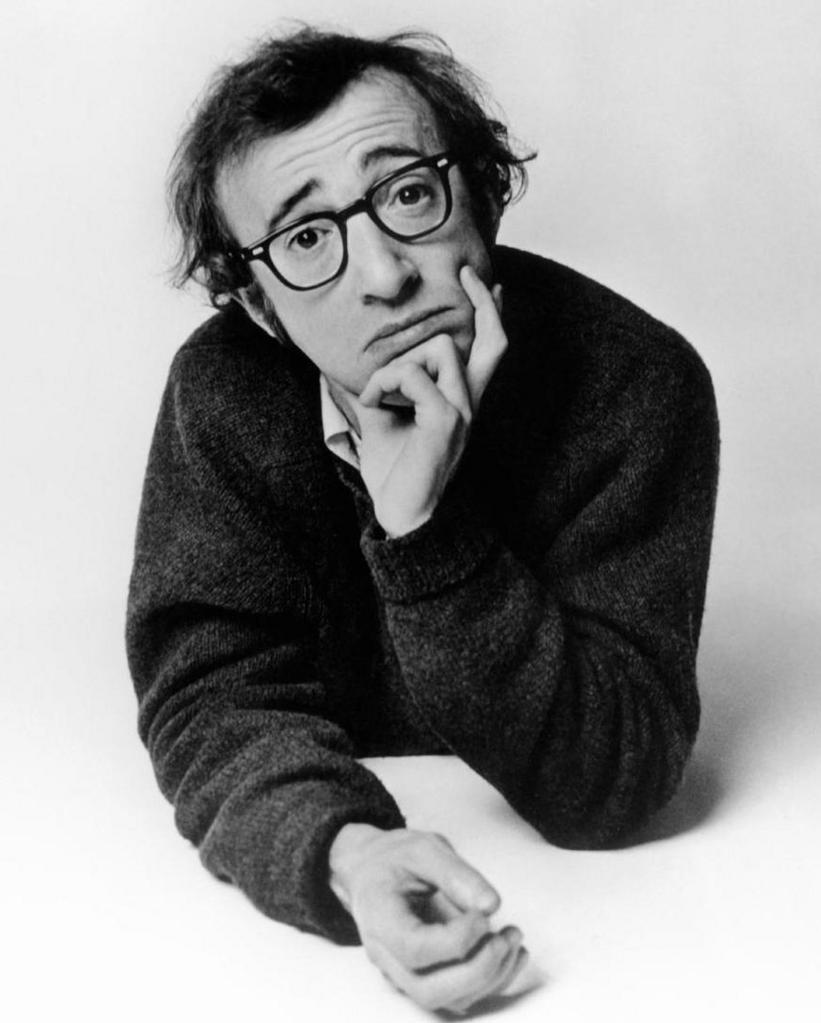
« L’avantage d’être intelligent, c’est qu’on peut toujours faire l’imbécile, alors que l’inverse est totalement impossible. »
Citation souvent attribuée à Woody Allen
The Doors – People are strage
L’avantage de l’intelligence : petite histoire d’une citation voyageuse
On la croise partout : sur les réseaux, dans les recueils, sur les murs et jusque sur les stickers muraux…
« L’avantage d’être intelligent, c’est qu’on peut toujours faire l’imbécile, alors que l’inverse est totalement impossible. »
Signée Woody Allen. Sauf !!!! qu’il ne l’a ni écrite ni prononcée. Sa véritable histoire commence ailleurs, quarante ans plus tôt, dans un quotidien régional du nord de l’Allemagne.
1971 : une naissance allemande et anonyme
La première trace connue de l’aphorisme apparaît le 11 octobre 1971, en page 4 de l’édition d’Oldenbourg de la Nordwest Zeitung, à la rubrique « Spruch des Tages » — la pensée du jour. Aucun auteur n’est mentionné. C’est le chercheur autrichien Gerald Krieghofer qui a retrouvé cette occurrence en dépouillant chronologiquement la presse de langue allemande.
Dans sa forme d’origine, la phrase dit :
« Der Vorteil der Klugheit liegt darin, dass man sich dumm stellen kann. Das Gegenteil ist schon schwieriger. »
Soit, littéralement : L’avantage de l’intelligence, c’est qu’on peut faire semblant d’être bête. L’inverse est déjà plus difficile.
Le même journal la reprend le 7 mai 1974. La formule entre la même année dans un recueil, Die treffende Pointe de Markus M. Ronner (Ott Verlag, Thoune, 1974, p. 52), puis dans les grands dictionnaires de citations allemands : le Duden — Zitate und Aussprüche en 1993, le Harenberg Lexikon der Sprichwörter und Zitate en 1997. À chaque étape, elle gagne en légitimité ce qu’elle perd en traçabilité.
Tucholsky, premier propriétaire supposé
Très vite, un nom s’accroche à la phrase : Kurt Tucholsky. Le rapprochement se comprend. Satiriste de la République de Weimar, collaborateur de la Weltbühne, Tucholsky était un maître de l’aphorisme bref et grinçant. La formule lui ressemble.
Elle n’est pourtant nulle part dans son œuvre. Friedhelm Greis, sur son Sudelblog consacré à l’écrivain, a passé au crible textes et correspondance sans jamais la trouver. Le détail chronologique suffirait d’ailleurs : Tucholsky est mort le 21 décembre 1935 à Göteborg, trente-six ans avant la première occurrence connue.
L’attribution a la vie dure. En espagnol, la version « Tucholsky » circule aujourd’hui plus encore qu’en allemand ou en anglais.
2007 : la phrase change de continent
Le glissement vers Woody Allen est récent et parfaitement daté. La version française attribuée au cinéaste apparaît sur Twitter en 2007, l’italienne en 2008, l’anglaise seulement en 2009. La France et l’Italie sont les deux pays où l’attribution s’est imposée.
Or on ne trouve la phrase dans aucun de ses films, livres, spectacles ou entretiens. Son auteur reste inconnu.
Ce que le voyage a fait à la phrase
C’est peut-être le plus intéressant. En passant les frontières, l’aphorisme n’a pas seulement changé de père : il a changé de nature.
L’allemand pratique la litote. Das Gegenteil ist schon schwieriger — « l’inverse est déjà plus difficile » — est une remarque en coin, presque un haussement d’épaules. Les versions latines, elles, durcissent la chute : totalement impossible, del tutto impossibile. La discrétion devient axiome.
Le vocabulaire se déplace de la même façon. Klugheit, qui tient autant de la sagacité que de l’intelligence, devient « être intelligent ». Sich dumm stellen, faire semblant d’être bête, devient « faire l’imbécile », plus théâtral, plus proche du numéro comique. Autrement dit : la phrase a été retaillée pour la bouche qu’on voulait lui prêter.
L’anglais conserve d’ailleurs les deux états. Une version fidèle à l’allemand : The advantage of being intelligent is that you can pretend to be stupid. The opposite is rather difficult. Et la version « Woody Allen », apparue en 2009 : The advantage of being smart is that you can always act like an idiot, but the opposite is completely impossible.
Une citation orpheline se laisse remodeler sans résistance. C’est même à cela qu’on la reconnaît.
Pourquoi Woody Allen ?
L’attribution n’est pas une preuve, mais elle est une lecture. Si des milliers de gens ont spontanément placé cette phrase dans sa bouche, c’est qu’elle occupe le registre qu’il a rendu familier : l’intelligence vécue comme un encombrement, l’ironie retournée contre soi, le bon mot qui protège d’un aveu. Le faux attributaire dit quelque chose de juste sur le texte, même quand il ment sur son origine.
Woody Allen en quelques lignes
Allan Stewart Konigsberg naît à l’hôpital Mount Eden, dans le Bronx, le 30 novembre 1935 selon son autobiographie, le 1er décembre selon la plupart des encyclopédies. Il grandit à Midwood, Brooklyn. Adolescent, il vend déjà des plaisanteries à des chroniqueurs de presse, puis écrit pour la télévision — notamment pour Sid Caesar. Il monte sur scène comme humoriste au début des années 1960, passe à la réalisation en 1969 avec Prends l’oseille et tire-toi.
Suivront Annie Hall, Manhattan, Hannah et ses sœurs, Match Point, Minuit à Paris, et un univers reconnaissable entre tous : humour névrotique, amours compliquées, psychanalyse, peur de la mort, fascination pour New York. Il détient le record de nominations à l’Oscar du meilleur scénario original — seize, pour trois statuettes. Clarinettiste, auteur de recueils humoristiques, il aura travaillé sur huit décennies.
Coda
Kurt Tucholsky meurt à Göteborg le 21 décembre 1935. Woody Allen naît à New York quelques semaines plus tôt, la même année. Rien d’autre qu’une coïncidence, bien sûr. Mais l’aphorisme, lui, aura mis un demi-siècle à passer de l’un à l’autre, sans jamais avoir appartenu ni au premier ni au second.
Il reste ce qu’il a toujours été : une pensée du jour, dans un journal d’Oldenbourg, sans signature.
Sources principales
- Gerald Krieghofer, Zitatforschung : « Der Vorteil der Klugheit liegt darin… » Kurt Tucholsky (angeblich)
- Friedhelm Greis, Sudelblog, liste des citations faussement attribuées à Tucholsky
- Markus M. Ronner, Die treffende Pointe, Ott Verlag, Thoune, 1974, p. 52
- Nordwest Zeitung, n° 236, 11 octobre 1971, p. 4
John Ibonoco
“The advantage of being smart is that you can always play dumb. The reverse is simply impossible.”
Often attributed to Woody Allen
The Doors – People are strage
The Advantage of Being Smart: A Short History of a Quotation on the Move
You’ve seen it everywhere: on social media, in quotation collections, on wall decals…
« The advantage of being smart is that you can always act like an idiot, but the opposite is completely impossible. »
Signed Woody Allen. Except !!!! he never wrote it or said it. Its real story starts somewhere else, forty years earlier, in a regional newspaper in northern Germany.
1971: A German Birth, Unsigned
The earliest known trace of the aphorism appears on October 11, 1971, on page 4 of the Oldenburg edition of the Nordwest Zeitung, in the « Spruch des Tages » column — thought of the day. No author is named. The Austrian researcher Gerald Krieghofer found it by working chronologically through the German-language press.
In its original form, the line reads:
« Der Vorteil der Klugheit liegt darin, dass man sich dumm stellen kann. Das Gegenteil ist schon schwieriger. »
Literally: The advantage of being clever is that you can act stupid. The other way around is rather harder.
The same paper ran it again on May 7, 1974. That same year it entered a collection, Markus M. Ronner’s Die treffende Pointe (Ott Verlag, Thun, 1974, p. 52), and from there the major German quotation dictionaries: Duden — Zitate und Aussprüche in 1993, the Harenberg Lexikon der Sprichwörter und Zitate in 1997. At every step it gained authority and lost its paper trail.
Tucholsky, the First Presumed Owner
A name attached itself early: Kurt Tucholsky. You can see why. A satirist of the Weimar Republic and a contributor to Die Weltbühne, Tucholsky was a master of the short, sour aphorism. The line sounds like him.
It appears nowhere in his work. Friedhelm Greis, on his Sudelblog devoted to the writer, went through the texts and the correspondence and never found it. The chronology alone would settle the matter: Tucholsky died in Gothenburg on December 21, 1935, thirty-six years before the first known appearance.
The attribution has proved durable. In Spanish, the Tucholsky version circulates even more widely today than it does in German or English.
2007: The Line Changes Continents
The shift to Woody Allen is recent and precisely datable. The French version credited to the filmmaker shows up on Twitter in 2007, the Italian in 2008, the English only in 2009. France and Italy are where the attribution took hold.
And the line turns up in none of his films, books, stand-up routines, or interviews. Its author remains unknown.
What the Trip Did to the Sentence
This may be the most interesting part. Crossing borders, the aphorism didn’t just change fathers. It changed character.
The German goes in for understatement. Das Gegenteil ist schon schwieriger — « the other way around is rather harder » — is a remark made out of the side of the mouth, closer to a shrug than a claim. The Romance versions sharpen the punch line: totalement impossible, del tutto impossibile. Restraint turns into axiom.
The vocabulary shifts the same way. Klugheit, which covers shrewdness as much as intelligence, becomes « being smart. » Sich dumm stellen, to play dumb, becomes faire l’imbécile — playing the fool, more theatrical, closer to a comic routine. Which is to say: the line was recut to fit the mouth it was meant for.
English preserves both states. One version stays close to the German: The advantage of being intelligent is that you can pretend to be stupid. The opposite is rather difficult. The other, the Woody Allen version that surfaced in 2009, is the one quoted at the top of this piece.
An orphaned quotation offers no resistance to reshaping. That’s how you recognize one.
Why Woody Allen?
The attribution isn’t evidence, but it is a reading. If thousands of people instinctively put this line in his mouth, it’s because it sits in the register he made familiar: intelligence as a burden, irony turned back on the self, the wisecrack that heads off a confession. The wrong author says something true about the text even while lying about where it came from.
Woody Allen in Brief
Allan Stewart Konigsberg was born at Mount Eden Hospital in the Bronx on November 30, 1935, according to his memoir; December 1, according to most encyclopedias. He grew up in Midwood, Brooklyn. As a teenager he was already selling jokes to newspaper columnists, then writing for television, including for Sid Caesar. He went onstage as a stand-up in the early 1960s and moved behind the camera in 1969 with Take the Money and Run.
Then came Annie Hall, Manhattan, Hannah and Her Sisters, Match Point, Midnight in Paris, and a world recognizable at a glance: neurotic humor, complicated love affairs, psychoanalysis, fear of death, an obsession with New York. He holds the record for Academy Award nominations for Best Original Screenplay — sixteen, for three wins. A clarinetist and the author of several humor collections, he has worked across eight decades.
Coda
Kurt Tucholsky died in Gothenburg on December 21, 1935. Woody Allen was born in New York a few weeks earlier, the same year. Nothing more than a coincidence, of course. But the aphorism took half a century to travel from one to the other, having belonged to neither.
It remains what it always was: a thought of the day, in an Oldenburg newspaper, unsigned.
Main sources
- Gerald Krieghofer, Zitatforschung: « Der Vorteil der Klugheit liegt darin… » Kurt Tucholsky (angeblich)
- Friedhelm Greis, Sudelblog, list of quotations falsely attributed to Tucholsky
- Markus M. Ronner, Die treffende Pointe, Ott Verlag, Thun, 1974, p. 52
- Nordwest Zeitung, no. 236, October 11, 1971, p. 4
John Ibonoco


Bonjour John, c’est exact! bisous bonne journée MTH
J’aimeAimé par 1 personne
Bisous Marie.
John
J’aimeJ’aime
Bonjour John.
C’est très intéressant. J’ai un petit faible pour la formulation d’origine que je trouve moins tranchée!
Belle journée !
J’aimeAimé par 1 personne
Merci Marie.
Belle soirée
John
J’aimeJ’aime